I Moved to Claude as a Freelance Designer (and Here's What's Better)
You've been using AI for a while now. You've got your prompts saved. You've figured out how to get decent output. It's...fine. It works. You copy, you paste, you tweak, you move on.
And if someone asked, you'd probably say AI's been really useful for your business.
I would have said the same thing 3 months ago. As a freelance designer, I'd been using ChatGPT since it launched. I had it tailored to my business. I thought I'd got it into a genuinely good place.
Then I moved everything to Claude. And honestly? It was a bit annoying. Because suddenly I could see how much time I'd been wasting before.
This isn't a comparison review. I'm not going to list features side by side and tell you which one "wins." What I want to share is what actually changed when I switched: content creation that's 50% faster, outputs that sound like me first time round, AI that updates my Canva templates, and more headspace for the strategic design work that only I can do.
Here's how it played out…
🎥 Prefer video? Keep scrolling for a behind the scenes look at my Claude setup
The before: ChatGPT was working. Sort of.
I've been using AI in my freelance design business since ChatGPT launched in 2022. Early adopter, hand up, guilty as charged. I've dabbled with other tools along the way too, but ChatGPT was my main one, and I thought I'd got it into a genuinely good place.
I was using it for a lot. Writing emails tailored to my tone. Drafting blog posts. Creating Pinterest captions and descriptions. Even replying to enquiries.
But here's something I feel strongly about, and it applies whatever AI tool you're using:
I always provided the thought leadership myself. The ideas, the angles, the opinions? Those came from me. AI handled the execution.
And I think this matters more than most people realise, especially if you're a freelance designer positioning yourself as an expert to get high ticket clients. Tools like ChatGPT and Claude are large language models. Everything they suggest is drawn from what's already out there on the internet.
So if you let AI generate your ideas and your content, you're essentially repackaging someone else's thinking. You can't be a thought leader and seen as an expert if your thinking has been sourced from somewhere else.
Your clients are hiring you for your perspective. Your expertise. Your point of view. AI is brilliant at turning those ideas into polished content quickly. But the ideas themselves? They need to come from you.
So that's how I was using ChatGPT. My thinking, its writing. And it was working.
I used to say, pretty confidently, that AI could get you about 80% of the way there. You'd put in the last 20% yourself, tweaking the output, adjusting the tone, making it actually sound like you. That felt like a fair deal.
But here's what I didn't realise until I switched: there was friction I just couldn't see. Because AI had already saved me so much time compared to doing everything manually, I thought this was the good version. The bar was "better than before," and it cleared that easily. I just didn't know the bar could be so much higher.
I was switching between tools constantly. Copying and pasting between different apps. Jumping between separate chats within ChatGPT because each one only held part of the picture. One chat knew my tone of voice. Another had my business context. A third had my content strategy. None of them talked to each other.
I remember one email in particular. The strategy was spot on. Exactly the right approach. But the tone of voice was off. So I'd tweak the tone, and the strategy would drift. Fix the strategy, and the tone would go again. Back and forth, back and forth, editing manually, trying to hold both things in place at once. That one email probably took me three times longer than it does now.
And at the time I thought, "this is just how AI works."
I didn't realise the tool was the limitation.
If you're a freelance designer who wants more tips on running your business without burning out, I share stuff like this every Tuesday in my free newsletter, Freelance Diaries. You can sign up free by clicking here.

What made me switch
I'm not going to get into politics here. But recent shifts in the political climate got me looking at alternatives to ChatGPT, and I'm genuinely glad they did. Because without that nudge, I might never have found Claude.
The game-changer: skills that mix and match
The thing that makes Claude different, and I mean properly different, is the skills feature.
Here's what it does: You can train Claude on specific areas of your business, each one saved as a separate "skill." Your tone of voice. Your business information. Your Pinterest strategy. Your customer service approach. Your newsletter format. Whatever you need.
That part is similar to what you can do in ChatGPT. But here's where it changes everything: you can mix and match those skills within a single conversation.
So let's say I want to create a Pinterest pin. Claude pulls from three skills at once: my Pinterest strategy (so it knows how I approach pins structurally), my business information (so it knows what topic to write about and how it connects to my offers), and my writing voice (so the output actually sounds like me, not like a robot wrote a cover letter).
The result? High-quality copy that's strategic, on-brand, and in my voice. Without me switching tools, copying and pasting, or starting from scratch every time.
But it doesn't stop at the copy.
Claude updated my Canva template
This is the bit that genuinely made my jaw drop. Because I didn't even know this was possible.
I knew there were ways to speed up the Canva process. I'd tried them. But they were clunky. Exporting things as a CSV, formatting it, importing it back in. By the time you'd done all that, you hadn't really saved any time.
This is completely different.
Through the Canva integration, Claude takes the pin content it's just created and updates my Canva template with the new copy. Strategy, words, and design update, all in one flow. One screen.
I didn't open Canva separately. I didn't export anything. I didn't paste anything. It was seamless.
And it's not just Pinterest. Claude can create documents right within the platform - proposals, call summaries and insights, research - without me needing to open another app or piece things together manually.
I've built 17 "skills" so far, and they break down pretty much every repeated action across my freelance design business. From writing emails to drafting blog content to handling customer service replies to creating social media assets. Each skill holds a different layer of knowledge, and Claude combines them however the task needs.
The same tasks I was doing in ChatGPT? I now do them in Claude. But faster, cleaner, and with dramatically less manual bridging from me.
What's actually changed since switching
Let's talk results.
Speed. Content creation is about 50% faster across the board. What used to involve switching tabs, pasting context, and editing heavily now happens in one place because the knowledge is already built in. The back-and-forth has basically disappeared.
Quality. Remember how I said AI gets you 80% of the way there? I've updated that number. With Claude and the skills I've set up, it's more like 95%. And that includes 95% of your graphic design updates too, thanks to the Canva integration. The output is more tailored because the skills layer together. My voice, my strategy, and my business context all inform the result without me manually stitching them together each time.
Where my energy goes. This is the bit that excites me most, and it's not about speed. Because Claude handles the repetitive execution so well (the emails, the captions, the first drafts), I've got more headspace for the strategic, client projects and business-building work that only I can do. The thinking. The planning. The decisions that actually shape where things go next.
For example, I've built an automated re-engagement email sequence for warming up people who've shown interest in the past. Something that’s been a “nice to have” becoming a reality. That's the real shift. It's not just about doing the same things faster. It's about where your energy goes when the repetitive stuff isn't draining it.
And if you're a freelance designer whose marketing always gets pushed to the bottom of the list when client work picks up? This changes that. Because the speed at which you can now create the text and the graphics means marketing doesn't have to be the thing that gets sacrificed when you're busy.

Here's the honest summary
I thought I had AI working well in my freelance business. And it was, in the sense that it was better than doing everything manually. But moving to Claude showed me how much friction I'd been accepting as normal. The copying, the pasting, the context-switching, the 20% manual fix-up on every piece of output.
Now the tool actually knows my business. It knows how I write, what I offer, how I approach strategy, and it can combine all of that in a single conversation. The output is better. The process is faster. And my energy goes into the work that actually matters: the strategic thinking, the creative decisions, the stuff that only I can do.
If you want to set this up for your own business
You don't need to figure out skills, prompts, and integrations on your own. I can help you train Claude on your voice, your processes, and your offers, so the output actually sounds like you and saves you real time. Plus, I can give you all the strategy so that it’s not just creating for the sake of it, but it’s creating with purpose and impact on your business.
If you're a freelance designer who's been using AI but it still feels like you're doing most of the work? That's not an AI problem. That's a setup problem. And it's very fixable.
If you'd like help setting this up for your business, get in touch using the form below. I'd love to chat about what this could look like for you and how we can work together.
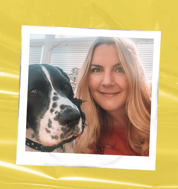
Vicki Wallis
Founder, Freelancing Simplified
🔥 Est: 2021
👗 Freelance designer since 2016
🌎 Travel obsessed
🐾 Dog Mum to Max
💜 On a mission to help overwhelmed freelancers find freedom
• Free weekly email •
Freelance Diaries
Build steady income without burning out