How to Stop Scope Creep Before It Starts (Without Awkward Conversations)
The client said "Oh, could you also just..." and your stomach dropped.
Not because you can't do it. But because you know what "just" actually means.
Another evening. Another unpaid hour. Another project that quietly expands while the fee stays exactly the same.
Scope creep is one of those things every freelance designer recognises instantly. You can feel it happening in real time. And yet stopping it? That bit feels harder than it should.
Partly because, yes, it is awkward. Nobody wants to be the person who says "that's not included" to a client they like, who pays on time, who recommends them to other people.
So you say yes. Again. 😩
Here's the thing though. The reason it feels so awkward is usually because there's nothing in your project setup doing the heavy lifting for you. No document to point to. No defined scope to reference. No process that makes the conversation simpler.
When the setup is right, clients are far less likely to ask in the first place. And when they do? It becomes a straightforward, professional conversation instead of an internal panic.
This post is about what to put in place so that happens. Not a script for saying no. Not a pep talk about boundaries. Just the structural stuff that makes scope creep far less likely, and far less stressful when it does show up.
Let's get into it.
Why scope creep keeps happening (even when you can see it coming)
You already know what scope creep looks like. That's not the problem.
The problem is that your projects don't have a fixed container.
Think about it. If there's no document listing exactly what's included in this phase of work, how do you know when the client has gone past it?
If there's no defined number of revision rounds, how do you push back on round four when rounds one through three were never labelled?
If the project has no stages with clear endings, every part of it stays permanently "in progress."
Permanently available for additions 😬
And that's where the awkwardness lives. Not because you lack confidence, but because there's nothing concrete to point to. You end up relying entirely on your own ability to have the conversation, when really, the project setup should be handling most of that for you.
It compounds too.
When scope creep happens once, it sets the tone for the whole project. The client learns (without realising) that "just" works. That extras don't come with a cost. Not because you said the boundaries were flexible, but because nothing in your setup said they weren't.
And there's another layer. When scope isn't clearly defined upfront, you start second-guessing.
"Did I actually say this was included? I can't remember. Maybe I implied it. Maybe the proposal was vague. Maybe I should just do it."
I remember in my early days scrolling back through weeks worth of emails to try and find where I'd tried to set a boundary with a design client. And when I eventually found it I realised I'd been too vague for it to properly register with the client. Or me 🙈
That internal negotiation is exhausting. And it happens project after project, client after client, because the underlying setup hasn't changed. 😬
If you're a freelance designer who wants more tips on running your business without burning out, I share stuff like this every Tuesday in my free newsletter, Freelance Diaries. You can sign up free by clicking here.

Where scope creep actually starts (it's usually three places)
Scope creep doesn't arrive in one dramatic moment. It builds up. Quietly. Gradually. In places you probably haven't thought to look.
👉 The deliverables were never specific enough
"Brand identity design" could mean ten different things depending on who's reading it.
If your proposal says "logo design and brand guidelines" but doesn't specify what's included in the guidelines, you've left a gap. And clients will fill gaps with assumptions.
How many templates? What file formats? Are font usage rights included or licensed separately? How many colourways? Is the brand guidelines document 5 pages or 25?
These feel like small details. But they're the exact details that come back as "oh, could you also just..." three weeks into the project.
Not because the client is being difficult. But because they genuinely don't know where the line is.
You haven't drawn it.
👉 Revisions have no defined rounds (or no definition of what counts as a round)
This is one of the biggest places scope creep takes hold.
The client sends feedback. You make changes. They send more feedback. You make more changes. There's no "this is round two of three" moment. No indication that revisions have a structure or a limit.
So it just...rolls on.
But it's not just the number of rounds that matters. It's what counts as a revision versus what's actually a change in scope.
I always say something along the lines of "revisions can't alter the original scope of the project". Because say a client originally briefed you on 3x legging designs and 2x tops. They come back after the first round and say actually, they want 3x tops and 2x leggings instead.
That feels like a revision. But you're essentially starting again on a third top design from scratch.
That's not a tweak. That's new work.
Without something in your setup that distinguishes between the two, you absorb it. Because what else can you do?

👉 The project has no stages or milestones
When everything is "in progress" from start to finish, there are no natural pause points. No moments where you hand something over and say "this phase is complete." No milestones that help you and the client know where you are and that things are on track.
Think about how different it feels when a project moves through defined stages: trend research, moodboard, initial designs, technical designs, colour options, final files.
Each one has a deliverable. Each one gets reviewed. Each one gets signed off before you move to the next.
Without those milestones? The client doesn't know where they are in the process. Honestly? Neither do you.
Which makes it almost impossible to say "that's outside the current scope" when there's no clearly defined current scope to point to.
These aren't personal failings. They're gaps in project setup. And they create exactly the kind of ambiguity that scope creep thrives in.
What scope protection actually looks like (hint: it's less stressful than you think)
Once you see that scope creep is largely structural, the fix becomes structural too.
You don't need a script for difficult conversations. You need a setup that does most of the work before the awkward moment ever arrives.
1️⃣ Define your deliverables in writing. With specifics.
Not "brand design" but "primary logo, secondary logo mark, colour palette (5 colours), typography selection (2 fonts), brand guidelines document (up to 10 pages)."
Go further. How many templates? What file formats will be delivered? Are font licences included or does the client need to purchase separately? How many colourways?
The more specific you are upfront, the less room there is for assumptions later.
When it's written down, in your proposal and your onboarding docs, it stops being a conversation and starts being a reference point.
So when the client asks "could you also do social templates?", you're not saying no. You're saying "thanks for asking, I can quote for it as an add-on if you'd like and we can work on it once I've finished the branding design?"
Very different energy. 😌

2️⃣ Build revision limits into your project structure, and define what counts as a round
If you offer three rounds of revisions, say so. Put it in the proposal. Put it in the onboarding. And then, when you send a file, label it. "Here's Version 1 of 3."
But go one step further.
Make it clear that if change requests alter the original scope of the project, they'll be billable. A revision is refining what was briefed. A scope change is asking for something different.
If a client briefed 3x legging designs and 2x tops, then decides they actually want 3x tops and 2x leggings? That's not a tweak. You're starting again on a design that wasn't in the original brief. That's new work, and it needs to be treated as such.
When this distinction is written into your process from the start, you're not having a confrontation. You're referencing what the client has already agreed to - clearly in the proposal, not something sneaky hidden in tiny T+C writing.
It takes the personal discomfort out of it almost entirely.
3️⃣ Create project milestones with genuine end points
Instead of one long, rolling project, break it into defined stages. Trend research. Moodboard. Initial designs. Technical designs. Colour options. Final files.
Each stage has a deliverable, a review moment, and a sign-off before you move to the next one.
This does two things. It helps the client know where they are and that things are on track. And it gives you natural gates.
So when something new crops up, you can place it: "That's a great idea. It sits outside this phase, but we could look at it as an add-on or in a follow-up project. Shall I send you a quote?"
Do you feel the difference?
You didn't say no. You didn't have an awkward conversation. You invited an add-on sale. The scope was protected, the client felt looked after, and you potentially earned more from the project. Not less. ✨

4️⃣ State your hourly rate for additional work and what it means for timing
One of the most effective scope protectors is also one of the simplest.
Include a line in your proposal that says something like: "Any work outside the agreed scope will be charged at £X per hour and may extend the project timeline depending on my availability."
You might never need to use it. But having it there changes the dynamic entirely. It's not a threat. It's professionalism.
"But what if the client gets annoyed?"
This is the worry that keeps most designers from putting these things in place.
So let's address it.
Clients don't get annoyed by structure. They get annoyed by surprises.
A client who knows upfront that there are three revision rounds, that additional requests are charged separately, and that the project has clear phases? That client feels safe. They know exactly where they stand. They know what they're paying for. They know what happens next.
It's the absence of structure that creates friction. Because without it, both sides are guessing.
And guessing is where resentment builds. On both sides.
The irony? Putting this stuff in place doesn't make you harder to work with. It makes you easier. Clients have often surprised me in the past by saying things like “you’re so easy to work with” or “I appreciate you guiding me through this” on feedback forms - something I didn’t think would be on their radar, but it really is.
Laser sharp clarity on proposals a selling point, not a barrier.
What changes when you implement these steps
When your projects have defined deliverables, visible revision rounds, clear milestones, and a stated process for additional work, something shifts.
You stop bracing yourself every time a client email lands. You stop doing mental maths about whether the extras are "worth mentioning." You stop lying awake wondering if you should have said something three weeks ago.
Projects start to feel contained. Like they have a beginning, a middle, and an end.
Work gets lighter. Not because you're doing less, but because the edges are clear.
And here's the bit nobody talks about: your clients' experience gets better too. People like knowing where they are. They like feeling that someone is in charge of the process. They're hiring you as an expert and expect you to lead them.
Structure doesn't make things feel rigid. It makes things feel calm, professional, and trustworthy.
You don't need to suddenly become a person who finds these conversations easy. You just need a project structure that makes them far less likely to happen, and far simpler to handle when they do.
The next step
If this post made you think "yes, this is exactly what's happening in my business," you're not alone.
If you're a freelance designer who's tired of feeling behind no matter how hard you work and you want someone to help you structure your business so it runs smoothly behind the scenes - the SOPs, the project stages, the tools set up properly, all of it - I'd love to chat.
I work with experienced freelance designers to simplify how their business operates so they get their time and headspace back. Click here to get in touch, I’d love to chat!
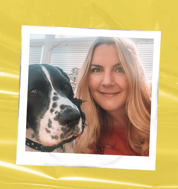
Vicki Wallis
Founder, Freelancing Simplified
🔥 Est: 2021
👗 Freelance designer since 2016
🌎 Travel obsessed
🐾 Dog Mum to Max
💜 On a mission to help overwhelmed freelancers find freedom
• Free weekly email •
Freelance Diaries
Build steady income without burning out