You wrapped up a project last week. The client was happy. You were happy. The work was genuinely good.
You sent the final files, they said thanks, and then...nothing.
Not awkward nothing. Just...quiet. They went back to their business. You went back to yours. Fast forward a while and you're having a slower month. You're sitting there thinking: where's my next project coming from?
If you've been freelancing for a while, you've probably been through this cycle more times than you can count. Great work, happy client, lovely feedback...and then radio silence. Suddenly you're back to refreshing your inbox. Thinking about updating your portfolio. Wondering if you should finally "get serious about marketing."
Here's what most advice will tell you: post more. Network more. Pitch more. More, more, more 😩
And here's what I actually think is going on: the reason clients aren't coming back has almost nothing to do with your marketing. It's got everything to do with how your projects are ending.
That's what I want to dig into in this post. I'm going to share the thinking behind what I teach freelance designers when I work with them 1-on-1, because it completely reframes how repeat work happens. Not through more marketing effort, but through your offboarding process.
Let's get into it…..
Why "more marketing" isn't the answer
Most freelance designers treat repeat work like a marketing problem. The project ends, the client goes quiet, and the assumption is: I need to stay visible. I need to follow up. I need to remind them I exist.
And look, checking in with past clients is a good thing. I actively recommend it. But if that's your entire repeat work strategy, and it's sitting on your to-do list rolling over day after day because client work always wins...that's a sign something else is missing. 😅
The check-in shouldn't be doing all the heavy lifting. It should be the cherry on top of a project close that's already done most of the work for you.
This is one of the reasons freelance income can feel so fragile even when you're fully booked.
You're earning well right now, but nothing is set up to make that income predictable. Every new project needs a new lead, a new enquiry, a whole new conversation from scratch.
But here's the thing. The problem isn't that you're bad at marketing. It's not that you're not posting enough. It's that your projects are ending with a full stop instead of a comma.
The final delivery happens. Files get sent. Invoice gets paid. And then you both just...go your separate ways. Nothing bridging the gap to next time.
That's not a marketing failure. And it's entirely fixable with a few changes to your offboarding process.
If you're a freelance designer who wants more tips on running your business without burning out, I share stuff like this every Tuesday in my free newsletter, Freelance Diaries. You can sign up free by clicking here.

Repeat work is a delivery outcome, not a marketing tactic
This is the bit that changes everything, so stay with me.
Repeat clients aren't something you chase after a project ends. They're something you build into how you deliver.
It's not that your work isn't good enough. Your clients are happy. They tell you so in their feedback and reviews.
The issue is simpler than that: your projects don't have a built-in bridge to what comes next.
Here's what that actually looks like: You finish the work, send the final assets, and the project is "done." But "done" doesn't include a conversation about what they might need next quarter. It doesn't include a natural moment to mention your other services. It doesn't include a handover that makes the client think: "oh, I'll definitely need her again when we get to that stage."
Instead, the project just...stops. And you both go back to your separate corners.
Think about it from their side. A project ends. They hear nothing. They don't sit there thinking "I should book that designer again in three months." They move on. They get busy. They forget. Not because the work wasn't good, but because there was nothing connecting this project to the possibility of another one.
This is really common among experienced designers, by the way, it's not a beginner mistake.
When you were less busy, you had the headspace for all of this. You'd nurture relationships, remember to follow up, keep tabs on who might need what. But as things got busier, that informal system quietly broke down. Too much to remember. Too many clients. Too many open loops.
You didn't lose the skill. You outgrew the setup that used to make it happen naturally.

So what does this actually look like in practice?
One thing I love helping clients with is this: building repeat work, referrals, and advance bookings into your offboarding process. Not your marketing calendar. Into your project workflow.
The core idea is that there are specific moments inside every project where the seeds of repeat work get planted. Not as a sales pitch. Not as an awkward upsell. As a natural part of how you close, hand over, and wrap up.
Here are a few things worth thinking about:
👉 What does your final email to a client actually say?
Go and look at the last one you sent. Does it just say "here are your files, thanks so much, it's been lovely working with you"? Or does it open a door to what's next? There's a version of that email that wraps up the project and naturally plants the idea of future work, without feeling remotely pushy. Most designers have never thought about this email as anything other than a sign-off. It's actually one of the most important touchpoints in your whole client journey.
👉 The close matters more than the start.
Most designers pour all their energy into onboarding. And a good onboarding process matters enormously. But the close is where repeat work lives. It's the last impression. It's where the client decides (consciously or not) whether working with you felt complete, professional, and easy to do again.
👉 What happens at the end shapes what happens next.
If the project fizzles out over email, the client's lasting memory is...a fizzle. If it closes with intention, with a clear sense of what was delivered and a natural prompt about what could come next, the memory is completely different. That is the memory that brings them back six months later. And it also gives you a reason to check back in with them, in a natural, non-awkward, way.
👉 Referrals are a byproduct of how you deliver.
You don't need to ask for referrals (although you can!). But you do need to deliver in a way that makes referring you easy and obvious. When a project closes with clarity, the client doesn't have to think about whether to recommend you. They just do. Because the experience made it the most natural thing in the world.
If repeat work feels inconsistent in your business, the fix isn't more marketing. It's changing how your projects end. That's the pattern I see again and again.

What shifts when this is in place
When repeat work is built into your delivery rather than bolted on as an afterthought, a few things change. And they're not small things:
✅ The pressure to constantly find new clients drops.
Not because you stop attracting new people, but because a real chunk of your income starts coming from people who already know and trust you. That's the difference between income that looks good on paper and income that actually feels stable. It changes the whole nature of how your business feels.
✅ Marketing stops being this huge, guilt-inducing weight.
When repeat work and referrals are flowing, you don't need to post five times a week to keep enquiries coming in. Marketing becomes something you choose to do, not something you have to do to survive.
✅ And more time off actually becomes possible.
When you know your existing clients are likely to rebook, you can plan your calendar properly. You can take a few weeks off without the nagging fear that you'll come back to an empty pipeline.
That's what changes when this stuff is set up properly. Not just your day-to-day, but how sustainable the whole thing feels long-term.

"But some of my clients do come back..."
You might be reading this thinking: hang on, I already get some repeat work. And you probably do. If you're good at what you do (and you are), some of it happens naturally.
But there's a difference between repeat work that happens accidentally (because you're talented and likeable and people remember you) and repeat work that happens by design (because your delivery is set up to create it).
Accidental repeat work is lovely, but it's unpredictable. You can't plan around it. You can't build your calendar on it.
Repeat work by design is steady. It compounds. And most importantly, it doesn't require you to be constantly "on," constantly visible, constantly chasing.
That distinction really matters when you're already at capacity and the last thing you need is another thing to manage. 😅
If this sounds like what you need
The pattern I've described here is one of the most common setup problems I see in established freelance design businesses. It's also one of the most fixable. Which is the good bit. ✨
I love supporting other freelancers and building this into your business properly: the project close structure, the repeat work triggers, the referral systems, all shaped around your specific services and clients. It's not a template you download and hope for the best. It's something we build together so it actually fits how you work.
If you're tired of finishing great projects and then starting from scratch every single time, I'd love to chat with you. Click here to get in touch.
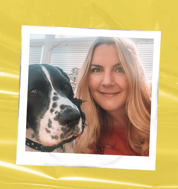
Vicki Wallis
Founder, Freelancing Simplified
🔥 Est: 2021
👗 Freelance designer since 2016
🌎 Travel obsessed
🐾 Dog Mum to Max
💜 On a mission to help overwhelmed freelancers find freedom


• Free weekly email •
Freelance Diaries
Build steady income without burning out
Your suitcase is still empty, it’s 11pm, and you’re answering “just one quick email” before you go away. If the week before a break always feels worse than any client deadline, it’s not down to you. It’s how your projects are planned, and once that changes, your holidays can be proper holidays again.