How to Protect Your Creative Energy While Your Business Grows
You got into design to be creative, right?
Not to spend your mornings chasing feedback and re-reading your own proposals because you can't remember what you agreed to. Not to sit down to start a project you're actually excited about and then lose forty minutes to an email thread, a new Instagram update, and a client who's "just quickly" changed the brief.
And yet...here you are. 😩
The spark's still there, technically. But by the time you've waded through everything else, the space around it has shrunk. You open the design file and something's shifted. You're not blocked, exactly. You're just...depleted. Before the creative work has even started.
Sound familiar?
Here's what nobody really talks about when they say "protect your creative energy." It's not about morning routines. It's not about journaling or finding your flow state or buying a nicer notebook (though, no judgement if you did 😅). It's about what's happening behind the scenes in your business that's quietly stealing from the part of you that does the actual work.
The design work isn't what's draining you. The everything-else is.
And if you're growing? If more clients are finding you, if the work is getting better, if you're genuinely in demand? That means everything else is growing too. Not because you're doing anything wrong, but because a busier business generates more decisions, more admin, more context-switching, more "I'll just quickly sort this out before I start."
That's the pattern. And once you can see it, you can change it.
This post is about 3 shifts that protect creative energy as your business gets busier. Not productivity hacks. Not mindset tips. The actual things that stop your best creative work getting squeezed out by the stuff around it.
Let's get into it…
The real drain isn't too much design. It's too much re-deciding.
There's a specific kind of tiredness that comes from running a freelance design business, and it's completely different from the tiredness you feel after a long day of actual creative work.
After a big design day? You're tired but satisfied. Something existed that didn't exist before. That's the good tired. That's the tired you signed up for.
After a day of admin, emails, quoting, chasing, and switching between six different clients' needs? You're tired and frustrated. Nothing feels finished. Your brain has been making hundreds of micro-decisions all day, and none of them were creative ones. That's not what you got into this for. 😬
This is decision fatigue, and it's one of the biggest drains on creative energy that nobody frames as a creative energy problem.
Think about how many times a week you re-decide things that could have been decided once. How you format a proposal. What you include in an onboarding email. How you structure your project phases. What your revision process looks like. Where you save files. When you send invoices.
You're figuring it out. Every. Single. Time.
And every time you start from scratch, even on something small, your brain is using the same decision-making energy it needs for design work. By the time you actually get to the creative stuff? There's less of it left. The work that's meant to be the best part of your day gets whatever energy is leftover from everything else.
The fix isn't discipline. It's not about "being more organised" or trying harder to batch your admin.
It's about setting up defaults so your brain stops re-deciding things it's already figured out.
When a proposal has a structure you follow every time, it takes fifteen minutes instead of an hour. When your onboarding emails are templated (with room for personal touches, obviously), you're not rewriting them from scratch each time. When your project phases are defined, you don't have to figure out "what comes next" for every single client.
That's what I mean by structural protection. The decision gets made once, and then the system holds it. Your brain doesn't have to carry it anymore. And that energy? It goes back to the creative work where it belongs.
If you're a freelance designer who wants more tips on running your business without burning out, I share stuff like this every Tuesday in my free newsletter, Freelance Diaries. You can sign up free by clicking here.

Your calendar needs creative inputs, not just client outputs
Here's something I think experienced designers quietly struggle with. The feeling that you used to be more inspired, more curious, more excited about design itself, and you can't quite figure out where that went.
You got into this because you love creating things. You love getting inspired, the visual thinking, the moment when something clicks into place. That hasn't changed. But somewhere along the way, running the business started taking up so much space that the creativity got pushed into whatever corner was left.
When was the last time you went to an exhibition just because you wanted to? Read a design magazine without it being "research" for a specific project? Spent an afternoon in a bookshop or wandering around a part of town you don't normally visit, just to look at things?
These aren't luxuries. They're essential for great design. ✨
And without them, you end designing from what you already know rather than what you're discovering. That works for a while. But over time, everything starts to feel a bit same-y, a bit formulaic, and that's when the creative frustration really sets in. Not because you've lost your talent, but because you've stopped feeding it.
The problem is, when your business is super busy, there's no space for getting inspired. Every available hour gets filled with client work, admin, or the guilt of not doing either. The idea of blocking out a Thursday afternoon to visit a gallery feels indulgent, maybe even irresponsible, when there are emails waiting and a project running behind schedule.
But here's the thing: you can't be the best designer you can be if you're feeling frazzled.
You just can't. And you didn't build a freelance career so you could spend it feeling too busy to be inspired.
Creative inspiration needs to be a non-negotiable in your calendar. Not "nice to haves" that get pushed to next week (and then the week after, and then never). Actual, protected time that sits alongside client work, not underneath it.
This only becomes possible when your business runs cleanly enough that you're not constantly catching up. When projects have clear phases and defined endpoints, when admin is contained rather than sprawling, when you're not mentally carrying forty open loops at once...then there's room to feed the creative part of your brain.
And honestly? The quality of your work changes because of it. You can feel it. Your clients can feel it too.
Factor "brain space" into how you price and plan
This one's a shift in thinking, and it might feel a bit uncomfortable at first.
Most freelance designers price based on time, skill, and deliverables. Maybe you've moved to packages or project-based pricing (which is what I'd recommend, especially in 2026). But even with packages, there's a hidden cost that almost nobody accounts for: the brain space each project takes up.
And I don't just mean the obvious stuff, like a difficult client or a vague brief. I mean the transitions. The switching. The invisible time between one piece of work and the next.
Think about your calendar on a busy day. You finish one project, you open the next. Straight in. No gap. Sounds efficient, right?
But your brain doesn't work like that. You can't just step out of one project's world and into another without some kind of transition. There's a cost to that switch, and it's not just a few minutes of "where was I?" It's a drop in creative quality. You're physically in the next project, but mentally, part of you is still in the last one.
I learned this the hard way with tech packs. For me, tech packs are always deep concentration work. Measurements, grade rules, spec details. The kind of work where you need to be fully in it, no half-attention, no skimming. And I loved it, honestly.
But what I didn't account for, for the longest time, was what happened after.
I'd finish a tech pack and try to go straight into something else. A design project, a client call, whatever was next on the list. And I just...couldn't. My brain needed time to decompress. To come back down from that level of focus before it could do something different well. So I'd take a break. Make a tea, go for a walk, scroll my phone for a bit. 😅
And for ages, that break felt like wasted time. Like I was being unproductive. Like it didn't "count."
But here's what I eventually realised: that decompression time was a key part of doing the work well. It wasn't lost time. It was the thing that made the next piece of work good too. Without it, everything after the deep work was sloppy or half-hearted. With it, I could actually show up properly for whatever came next.
The problem was, I never factored it in. Not into my schedule, not into my pricing, not into how I planned my capacity. So it just...disappeared. Time that was essential but invisible. And I'd end every week feeling like I'd somehow lost hours I couldn't account for.
You probably have your own version of this. Maybe it's not tech packs. Maybe it's after a big presentation, or a complex layout, or a round of client amends that took every ounce of your focus.
Whatever it is, the pattern's the same: there's a transition cost, and you're not building it into your plan.
When you start thinking about capacity in terms of brain space rather than hours, interesting things happen. You stop back-to-back scheduling projects that need completely different kinds of creative energy.
You start building a buffer into your day that isn't "wasted" but is actually what makes the rest of the day work.
You start making sure this important time is factored into your pricing and project timeline. And you start protecting the energy that makes your work great, instead of spending it all on the switching and the catching up and the admin.
The creative energy. The reason you got into this in the first place.

"But I'm too busy to set any of this up right now"
I know. That's the irony, isn't it? 😅
The very things that would protect your creative energy require creative energy to set up. And right now, you don't have any to spare because it's all going on the daily grind of keeping clients happy and projects moving.
This is exactly why so many talented designers stay stuck in the cycle.
They know something needs to change. They can feel the drain. But the gap between knowing and doing feels impossible to bridge when you're already running at full capacity.
And you're not wrong about that. It is hard to build structure while running a business that doesn't have any yet. Anyone who tells you to "just block out a weekend and sort it" hasn't actually lived this.
What helps isn't a massive overhaul.
It's finding a way to make these structural decisions once, properly, with support, so they actually stick. That's the difference between watching a YouTube tutorial on a Saturday afternoon and having someone who understands your specific business help you build the thing that will hold it all together.
(And if you're thinking "I genuinely need someone to just do this for me"? That's exactly what The Audit, Simplify and Automate Build is for.)
Here's what changes when creative energy is protected
When the admin has defaults, when your calendar has space for inputs, when brain space is factored into how you plan...something shifts.
You start the day with actual energy for the work you chose this career to do. Projects feel creative again, not just logistical. Ideas come more easily because your brain isn't cluttered with open loops and half-finished to-do lists. You enjoy your work more. Like, properly enjoy it. The way you did when you first started freelancing and everything felt exciting and possible. ✨
And honestly? Your clients notice. Because the quality of what you deliver is directly connected to the headspace you had when you created it.
It's not about doing less. It's about making sure the things that don't need your creative brain stop borrowing from it. So that you have energy and excitement left for your design work.
You got into this to be creative. Let's make sure your business lets you be.

If you're feeling this right now
You've probably known for a while that something needs to shift. Not in a dramatic, burn-it-all-down way. Just in a "this could feel so much lighter if the behind-the-scenes stuff actually worked" kind of way.
That's exactly what I help experienced freelance designers do. Build the structure behind the business so the creative work gets the energy it deserves. Not the leftovers.
If that sounds like what you need right now, I'd love to hear from you. Get in touch here if you'd like to know more about how I can help you.
And if you want more posts like this landing in your inbox every week, join the Freelance Diaries newsletter. Practical strategies, the occasional behind-the-scenes story, and zero hustle. ✨
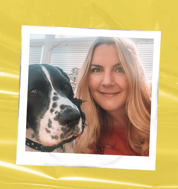
Vicki Wallis
Founder, Freelancing Simplified
🔥 Est: 2021
👗 Freelance designer since 2016
🌎 Travel obsessed
🐾 Dog Mum to Max
💜 On a mission to help overwhelmed freelancers find freedom


• Free weekly email •
Freelance Diaries
Build steady income without burning out
It's rarely the number of projects that wears you out. It's the constant jumping between them, the deciding, the loose ends, the holding it all in your head. Here's how to run several design projects at once without the 3pm burnout, using the simple structure that keeps a busy day feeling manageable instead of frantic.