You've been using AI for a bit now.
It's...fine? 🤔
It saves you a bit of time on subject lines. It's handy for a first pass at an Instagram caption. It helped you brainstorm names for that package you were working on last month.
It's not useless. It's actually pretty helpful.
But every single time you use it, there's this moment. You paste the output into the doc, you sit back, and you go...hmm.
You delete the opening line. You rewrite the second paragraph. You change "leverage" to "use" for the fourteenth time this week. 🙃
And by the time you're done tweaking, you're sort of wondering whether you could've just written the whole thing yourself.
Sound familiar? 😅
Here's the thing. AI isn't failing you. But it's not pulling its weight either. And there's a very specific reason for that.
The good news: it's completely fixable. The slightly annoying news: most of the AI advice floating around has skipped over it entirely.
If AI isn't working for you it's because of a setup problem. Not a tech problem.
Once you see it, you can't unsee it. Let me explain.
Why "this is probably as good as it gets" feels so obviously true
The AI conversation online is...a lot. 😩
On one side, people telling you AI is going to replace entire industries and you need to be using it for everything, right now, this minute. On the other, people telling you it's all hype and you should ignore the lot of it.
And you? You're somewhere in the middle. Quietly getting on with it. Using AI where it helps. Ignoring it where it doesn't.
You've probably made peace with the idea that the output is always going to need a rewrite. That it'll never quite sound like you. That it's useful for rough drafts, and anything polished has to go back through your brain and your fingers.
And honestly? Based on what you've tried, that conclusion is completely reasonable.
You asked AI to write a client proposal. It gave you something that read like a LinkedIn post from 2019. You asked it to draft an email to a new enquiry. It sounded like a customer service bot from a mobile phone company. 📱
You asked for an Instagram caption and it gave you three exclamation marks and the word "passionate". Twice.
No judgement here. That output IS underwhelming. You were right to dismiss it.
But here's what most AI advice has quietly skipped over:
What you were seeing wasn't the ceiling. It was the floor.
That was AI with nothing to work with. Not AI doing its best.
Want a set of AI team members who already know how a freelance designer actually works...so your workload feels sooo much lighter? Then The AI Dream Team is for you. Have a peek at the details here >>>

What this is quietly costing you
Every week you believe this is as good as AI is going to get is another week you're half-using it.
You're drafting the proposal from scratch. Again.
You're writing the client update manually, because AI would only give you something generic and you'd have to rewrite it anyway.
You're sitting down to a scope doc at 9pm, staring at a blank page, losing twenty minutes to a cup of tea before you've even started. 🫖
You're almost getting AI to save you time. But not quite. The value is there, but the leverage isn't.
Meanwhile, other freelancers have figured out one specific thing you haven't, and they're getting proposals written in under 5mins (yes, really). Email newsletters written in their exact voice. Marketing posts that sound exactly like them, even when they haven't had time to write them.
They haven't read a secret manual. They're not better at prompting. They're not magically better at "using AI".
They've just done the one piece of work everyone else has skipped.
Taken time to train their new team member...
Imagine you hired a person, and then told them absolutely nothing
Let me paint you a picture.
You've just hired a new copywriter. They're brilliant. Best in the business. Their portfolio is outstanding. References check out. You've been excited to work with them for months.
Monday is their first day.
At 9:02am, you fire off an email. "Hi! Can you draft the proposal for the Jenkins project please? Need it by 2pm. Thanks!"
And that's it.
No brief. No context. No examples of proposals you've written before. Nothing about your services, your pricing, or even what your business actually does.
You haven't told them anything about the client. Nothing about your voice. Nothing about the phrases you'd never use in a million years.
You've given them four sentences. And a deadline.
They're good at their job. They'll have a go. But what can they actually produce?
They can produce a proposal. A grammatically-correct, reasonably-competent, completely-fine proposal. The kind of proposal anyone could write with literally zero information to go on.
1:55pm, you open the doc. As you read it you think...this isn't it. This doesn't sound like me. This doesn't sound like my business.
Of course it doesn't. How could it? 😳
You haven't told them anything.
Now. Quick question.
Is the copywriter the problem here?
Would you ever conclude, from that experience, that copywriters just can't write proposals that sound like you? That you're always going to have to do it yourself because no one else can quite "get" your business?
Of course not. You'd onboard them properly. You'd send over your services. You'd share the last ten proposals you'd written. You'd take them through a couple of clients and explain what landed and what didn't. You'd tell them the words you never use, and the phrases that always feel like you.
And after that? They'd start sounding like you. Quickly. Within a few weeks, even days, you'd barely have to rewrite a thing.
Here's the thing: this is the exact dynamic that's happening with AI.
You're hiring it. You're giving it four sentences. And then you're concluding, from the generic output, that it doesn't really get your business.
But AI doesn't get your business because you haven't told it anything about your business yet. Same as the copywriter.
It's not the tech. It's the brief.

The bit that changes everything
AI is not a mind reader. 🔮
It's not a clever assistant, and it's definitely not magic.
It's a very capable writer who's been hired into your business...and sent to their desk on day one with zero onboarding. And then asked to write a proposal by 2pm.
When you frame it like that, the output stops being mysterious. It makes total sense.
You know your business inside out. You know your voice. Your offer structure. The exact way you close out a project. The phrases you'd never use. The phrases that always sound like you.
AI doesn't know any of that. Not yet.
Not until you tell it.
The thing nobody mentions: AI reflects what you feed it
Something worth sitting with for a second.
Most of the time when you're using AI, you're in a rush. You've just finished a client call, you've got fifteen minutes before the next one, and "post on Instagram" has been sitting on your to-do list for three days. You want to knock it out. Quickly.
So you type: "Write me an Instagram caption about my design services."
That's what AI has to work with.
It doesn't know who you are as a designer. It doesn't know what makes your services different. It doesn't know what your best clients have said about you. It doesn't know how you actually write when you've had time, space, and a decent cuppa. ☕️
So it does the only thing it can do. It writes an average caption about design services.
You read it and think: yeah...this is why AI doesn't really work for me.
But notice what just happened.
You gave AI the most rushed, context-free version of you. And you got back...a rushed, context-free output.
AI is essentially a mirror. It reflects back the quality of what you feed into it.
Most freelancers are mirroring themselves at their most frazzled, at 11pm, in between five other things. And then wondering why AI feels so generic.
But it doesn't have to work like that.
You can give AI the version of you that shows up when you've had time to think. The version of you that writes the proposals that actually land. The version of you that sends the email that actually lands a client.
Once that's what AI has to work with...that's what it gives back.
You get AI that sounds like you on your very best day. Not you knee-deep in client work, trying to quickly check "marketing" off your to-do list at 11pm on a Tuesday.

What to do differently now
If you're reading this thinking okay, but what does this actually look like?...good question.
The short version is this.
Before you ask AI to help with anything in your freelance design business, it needs to know three things:
Who your ideal client is.
What you offer as a freelancer.
The tone of voice you write in.
That means giving it your services and how they're structured. Your pricing. Your ideal client. Your tone of voice, with real examples (not descriptions). Your best proposals, your best emails, your best scope docs. The templates you've already written. The language you use. The language you don't.
When all of that lives somewhere and AI can reference it every single time it works for you, the output shifts completely.
In Claude, I do this using what's called a "Skill".It's essentially a file packed with context that the AI reads before it answers anything.
✏️ I wrote about what this actually looks like in practice in I Moved to Claude as a Freelance Designer (and Here's What's Better). How switching cut my content creation time in half. The 17 Skills I've now built across my business. And the moment I realised how much friction I'd been quietly accepting as normal. Worth a read if you're curious how it plays out day to day.
The principle is: onboard AI like a new team member. Then let it work for you.
That's exactly what I've built for freelance designers. The AI Dream Team is a set of AI team members that have already been properly onboarded for the work freelance designers actually do. Proposals, client emails, marketing, the lot. So instead of training them up yourself, you skip straight to having them. More on that here >>>

You might be wondering...
"Does this mean I have to spend ages setting AI up before it actually saves me any time?"
A bit. Yes. But not as much as you'd think, and the trade is wildly in your favour.
A few hours of proper setup saves you hours every single week. Forever. It's the same maths as building a template for a proposal you'll send a hundred more times. Painful once. Invisible forever.
"Can I do this myself, or do I need someone to build it for me?"
You can absolutely do it yourself. The principles aren't complicated.
But most experienced freelancers already know this about themselves…you don't have a capacity problem with learning new things. You have a capacity problem with doing them. Your schedule is full. Setup work sits at the bottom of the list, gets rolled over every week, and never actually gets done.
Which is exactly why it's the thing I get asked about most.
The AI shift, summarised
AI isn't broken. It's not too generic for your freelance business. It's not "not for your industry".
AI that creates underwhelming outputs is a setup problem, not an AI problem.
Once you've onboarded it properly, with your voice, your best work, your services, your style, it stops sounding like LinkedIn in 2019 and starts sounding like you on your sharpest day.
The freelancers getting real value from AI haven't found a clever hack or a magic prompt. They've just done the onboarding work that most people skip. They've downloaded their business brain into it.
And now they're getting drafts of proposals, emails, scope docs, and client updates in the time it used to take to make a cup of tea. ✨
That's not a small shift. That's hours back in your week. Admin that stops dragging. Client communication that sounds like you even when you haven't had time to write it from scratch. And giving you time back for the things that really matter to you.
This is the version of AI worth using. And it's closer than you think.
If your AI keeps giving you 'meh'
If you're a freelance designer who's been using AI...but it still feels like you're doing most of the work then The AI Dream Team was designed just for you! Your Newsletter Editor, Blog Writer, Instagram Writer, LinkedIn Strategist and many more are already trained on the way freelance designers work, and are ready to draft strategically from day one. Plus get support from me so you're not figuring it out alone.
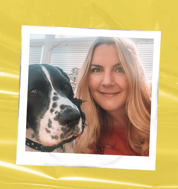
Vicki Wallis
Founder, Freelancing Simplified
🔥 Est: 2021
👗 Freelance designer since 2016
🌎 Travel obsessed
🐾 Dog Mum to Max
💜 On a mission to help overwhelmed freelancers find freedom


• Free weekly email •
Freelance Diaries
Build steady income without burning out
Your suitcase is still empty, it’s 11pm, and you’re answering “just one quick email” before you go away. If the week before a break always feels worse than any client deadline, it’s not down to you. It’s how your projects are planned, and once that changes, your holidays can be proper holidays again.