What to Put in Your Freelance Design Proposal to Get the Work (and Save Your Sanity)
It's Friday evening. You had plans. You didn't stick to them, because you need to get this proposal out "before the end of the week" and "the end of the week" is hurtling toward you at speed. 😬
You open the last one you sent. You're going to adapt it, obviously. It'll be quick.
It is not quick.
You end up rewriting half of it. Second-guessing the price. Staring at the "Deliverables" section wondering if you've put enough in. Or too much. Re-reading it five times. Wondering if it sounds confident. Wondering if it sounds too confident. Changing "I think" to "I'll" and back again.
An hour and one slightly cold dinner later, you hit send.
Sound familiar?
Here's the thing. Proposals should be quick. They should also win the work. And they should set up the project in a way that doesn't have you quietly weeping into your laptop at week four because the scope has, somehow, morphed.
Most experienced designers I speak to are doing two of those three things, tops. They're either winning proposals that spiral into scope creep nightmares (sanity: gone). Or they're writing clear, careful proposals that take four hours each and they're still not sure the client's going to say yes (sanity: also gone).
It doesn't have to be one or the other.
A proposal can genuinely do all three things at once: get the work, set clear expectations, and take you 15 minutes instead of two hours. ✨
The whole thing comes down to three shifts in how you think about what goes in the doc. Not which template to download. Not whether you need fancier proposal software. The actual thinking behind what to include and why.
Here's what I’m covering:
1️⃣ What to open with (this is how you win the work)
2️⃣ What to lock down (this is how you save your sanity)
3️⃣ How to make the whole thing take 15 minutes, not two hours
Let's go....
Open with what they actually want (not your deliverables list)
Most proposals open with a bit of flattery, a recap of the chat, and then...a list.
Phase 1: Discovery. Phase 2: Concepts. Phase 3: Refinement. Phase 4: Handover.
Useful. Thorough. And completely about YOU.
Here's the thing. Your client isn't sitting there going "ooh, I do love a good handover phase." They're sitting there going: will this actually fix the thing I need fixing?
Because nobody's buying a website. They're buying more enquiries. More credibility. More of the right clients. Less time spent explaining their business on every discovery call.
Nobody's buying a rebrand. They're buying the confidence to put their prices up. The little magic moment where someone Googles them and goes "oh, they look accomplished." The thing where their marketing finally matches the quality of their actual work.
A proposal that wins the work opens in their world. It names the outcome. It shows you've understood what they said AND what they didn't quite manage to say out loud.
You only need one or two sentences at the top. Something like: "From our chat, it sounds like what you actually need is X to give you Y, so that Z." That's it. That's the paragraph that turns a proposal from "here's my pricing" into "this person GETS it."
Write that one bit, and by the time they scroll down to the deliverables list, they're not auditing it anymore. They're already half-sold. They just want to check the logistics line up.
If you're a freelance designer who wants more tips on running your business without burning out, I share stuff like this every Tuesday in my free newsletter, Freelance Diaries. You can sign up free by clicking here.

Lock the scope down (this is where your sanity lives)
Right. This is the bit most proposals go vague on. Because vague feels flexible. And flexible feels friendly.
But it isn't friendly. It's future-you having a quiet breakdown at 10pm on a Tuesday. 😩
A proposal that protects your sanity spells things out. Not in a stiff, legal, small-print way. In a "let me just make sure we're both on the same page" way.
What's included. What's not. How many rounds of feedback. What actually counts as "a round" (because "some small tweaks" is not a round, and we all know it). Who's providing what, and by when. How long the whole thing takes once you've got everything you need. What happens if their timelines slip on their end.
You're not being difficult. You're being CLEAR.
And here's what experienced designers realise eventually: the clearest proposals are often the ones that get the fastest yes.
Because clarity = safety. When your client knows exactly what they're getting, for what price, by when, they don't need to go away and "think about it" for three weeks. They have everything they need to make the decision.
Clear proposal up front = clear project throughout = actually finishing by Friday = evenings that are evenings again.
(I wrote a whole post on how preventing scope creep is in the project setup, rather than a confidence thing. Most of it gets prevented right here, at the proposal stage. Not in the awkward mid-project Slack message where you're trying to politely explain why changing the entire layout counts as "a bit more work.")
Build it once, send it in 15 minutes
Now the bit that usually makes experienced designers go all misty-eyed.
Because most of you are writing proposals from scratch. Every. Single. Time.
Opening your emails, going "right, what did the last one look like", hunting through an old project folder, copy-pasting chunks, realising the pricing is off, rewriting the intro, getting halfway through and thinking I'm sure I wrote better wording than this once... ✉️
Plot twist: you've already written all of it. You just haven't saved it as a template. 😅
Here's what actually works.
Build ONE solid proposal template that covers 80% of the work. The sections that don't really change from project to project: the structure, the "how we work together" bit, the FAQs, the terms, the process. These are the same for every client.
Then build variations for your main package types. A branding template. A website template. A retainer template. A refresh template. Whatever makes up your offer suite.
Store them somewhere you'll actually use them. I keep all of mine in Dubsado, which means I can create a new proposal in a few clicks, the contract is baked into the same link, and the client can sign and pay in one go. (Honestly, Dubsado is one of those tools that quietly saves me hours every week. I love it so much I became an affiliate for them and you can get 20% off your first month or year through my link here.)
But if you're not ready for Dubsado, a well-organised folder of Google Docs works fine. The tool matters much less than the fact that the templates exist.
Then the magic layer: AI for the custom bits.
That opening paragraph we talked about? The one that shows you've heard what they actually want? That's a three-minute job with AI, IF you've trained it properly on your voice and the way you talk about your work. Paste in your discovery call notes, tell it the angle, and it drafts the paragraph in your tone.
(If your AI is currently churning out generic LinkedIn-voice sludge, that's a setup problem, not an AI problem. It's a whole separate conversation. But once it's trained on you properly, this bit gets super fast. Click here to see how I make the most of AI in my Freelance Design business)
Template + AI customisation = a proposal going out in 15 minutes, not two hours.
And because the structure is solid and you're not reinventing it at midnight, every proposal you send is better than the last scrambled one. Not worse. ✨

Right, so what's possible now?
Quick recap, because we covered a lot.
A proposal that wins the work opens in their world, not yours.
It shows you've heard what they're actually buying underneath the thing they asked for (time, money, confidence, proper sleep - it'll be something that deeply matters to them).
A proposal that saves your sanity spells things out. The scope, the rounds, the comms, the what-happens-if. Clarity at the start = calm in the middle = weekends that stay as weekends.
And a proposal that takes 15 minutes? That's a template plus a bit of AI doing the finish. Build the thinking once. Let AI help with the customisation. And suddenly the only Friday evenings you lose are the ones you actually choose to lose. Not the ones you've been accidentally donating to your business all this time.
The best bit: once this is in place, proposals stop being a project all of their own. They become a short, confident thing you do without second guessing it. A doc that kicks projects off on YOUR terms, with clients who already trust you.
That's genuinely what's possible.
And if the whole business feels like this...
Proposals are one slice of this, obviously. A chunky slice. But still just a slice.
If you've read all of that and thought: yep, proposals, but ALSO the onboarding is a mess, and the scheduling is chaos, and I'm writing every client email from scratch, and I'm still wondering why I feel behind when I'm also fully booked...that's the whole conversation.
It's not one broken doc. It's that the business has quietly outgrown its setup.
If you'd like more of this thinking landing in your inbox, the Freelance Diaries newsletter is where the new ideas show up first. The honest goings on of my freelance business written like a voice note from a friend who's figured a few bits out. Come and join us. 💫
And if you've been quietly thinking I'd actually like some help with this for a while now, get in touch here and we can have a chat about what working together could look like. No pressure, just a casual chat to see if we're a fit.
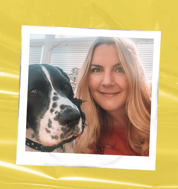
Vicki Wallis
Founder, Freelancing Simplified
🔥 Est: 2021
👗 Freelance designer since 2016
🌎 Travel obsessed
🐾 Dog Mum to Max
💜 On a mission to help overwhelmed freelancers find freedom


• Free weekly email •
Freelance Diaries
Build steady income without burning out
It's rarely the number of projects that wears you out. It's the constant jumping between them, the deciding, the loose ends, the holding it all in your head. Here's how to run several design projects at once without the 3pm burnout, using the simple structure that keeps a busy day feeling manageable instead of frantic.